There are lots of links from my travels with this post.
I lived in Egypt for several years and had just about got used to the everyday hassle every little thing there is hassle, got a bit tedious at times knowing that A simple question like how do I get to so and so from here turns into!!! need a hotel mister, or come look in my shop I have all the usual rubbish for sale, or need a lady. or man, no point asking a cop he is not here to answer my simple question, he is here to sit in the nearest chair or whatever and wait for prayer time, one of the reasons they never tie their boot laces up.So one sits down in a coffee shop makes friends with the waiter and he will usually point me in the right direction for a small tip on top of the price of a cupof tea, On this last journey around Egypt most of the hassle came from the police!! Suez, Ismalia, Port said. and Alexandria police being the main culprits every one of them if I gave them some money it was OK for me to go on my way and take photos.
In Suez, Mercure hotel chain has taken over one of the Islands on the canal, a must visit place in the birding book.
do we as birders go to just look or do we have a camera to take photos?
I walked past the security guards WHO SAID ITS OK FOR ME TO TAKE PHOTOS OF THE WILDLIFE,and headed in the direction of the canals edge. when a secretpolice man followed me
(how did mr tony know its a secret policeman, well they are about as secret as an elephant in a flock of sheep)
so Itook a photo of a whoopoe bird, not a photo I needed as I have more whoopoe photos than what I need , no photos he shouted. OK" asI packed my camera and headed back to the road, then he put his arm around my shoulder and said feluse ,(money) as I reached in my pocket to give him 5 le. chamseen (50) he said . and I gave him 50 from my wallet. I am not like that usually I usually take the money in this case 5le back and leave them with an angry look on the face, but I had traveled a long way to see the Suez canal and the birds that are supposed to be on this particular Island,http://nilelife.blogspot.com/2010/10/blog-post.html,
so I gave the guy 50le I traveled about 100yards and another jumped out of the bushes, most likely got a tip off , a rich tourist was about to enter his patch, enough of this I thought put my finger in the air and high tailed it back to the hotel.
the reason I did not blog about the police on my travels, was the regime in power monitor this web site and I did not want more hassle than necessary on my planed route around Egypt.
Ismalia, I had 2 cops ask for money,then the same in Port Said so I headed for the beach area on the Mediterranean side off the canal area. they can use the excuse no photos because of the large container ships heading down the suez into the red sea where Ismali pirates opperate, and if thats what I was doing I would book myself into the Mercure hotel who have all the balconies facing the canal, each time a boat passed phone my Ismali pirate pals up and give them the details of the vessel heading their way,
Or is there a secret police man in every room of the mercure hotel that faces the canal, NO PHOTOS???
the train from port said was a journey of eight hours as it returned half way to cairo before changing lines to Alex. alex blog is on http://nilelife.blogspot.com/.
I met Wael Ayaya in the Capsis hotel Cairo Capsis hotel 120le per nightand was an ok hotel clean and had a good restaurant,
he told me of the Cleopatra in Alex and how it was only a short walk from the station but he never said which of the 2 stations, so I got a taxi and of course THE DRIVER rather than go the direct route went halfway around Alex to make up for his 30le fare,(should have been 5le)the hotel was actually 10 minutes for me to walk direct to the prom two blocks.
I stayed in the Cleopatra hotel on the cornish for 4 days one of the best hotels I stayed in on this journey .http://nilelife.blogspot.com/2010/10/room-with-view-alexandria.html.
(apart from Klaus's apartment)
while in alex I visited the roman arena, pillar and catacombs, biblothea library is a must visit as is the Fort at Quatbey,http://nilelife.blogspot.com/2010/10/day-with-romans-looking-at-bath-tub.html,
thenstayed with a freind In summer city for almost a week just to relax before departing for Marsa Matrouh and Siwa, 4 times I went to enquire about transport for Marsa Matrouh none with a positive time or from where I should catch such transport apart from the train but that can take up to 8 hours to get to my destination so I was told.
On my last day staying with Klaus I went for a walk outside the summercity of 6th October, went to see if I could find the blue kingfisher along one of the Nile water canals.but with no luck;
 on the way back from the canal there where some micro buses parked opposite the Ramses 6th October tower
one guy was shouting Matrouh, so I stopped and asked if these buses go everyday to Marsa Matrough. yes all day he said when one is full it leave,7 in the morning I asked aiwa (yes).
 .
All along the Mediterranean coast to El Alamein there are hundreds of summer cities . with thousands if not millions of apartments for sale.and who buys these summer houses and flats that they will use for 2 maybe 4weeks of the year?
the guy who hassles me and you on the street,and that carriage /taxi driver who said 5 and charged 5 sterling/dollar/euro'


 .
Hacienda bay 1 -2-3 and four are complete so I wonder is this going to be the ORIGINAL Hacienda bay or no 5.
Arabian nights also have 5 summer cities. as I am sure 6th of October has more than one
Alexandria,6th of October summer city is 10 kilometer outside of Alex on theEl-alamein rd there are hundreds of summer cities on this 80 kilometre stretch along the Mediterranean sea, so why are there police who need money for photos. AAGH" I have answered my own question.
Left Alex at 7.00Marsa Matrough after hearing stories of Klaus,s visit of its aque and clean sea and beach I was looking forward to a few days in that part ofEgypt,the bus station was about i kilometer from the town centre and was quite an interesting walk each rondabout had fine tilled mosaic's of what was in the town or what the town was renowned but the touristic part of town was closed for the winter,one hotel facing the sea was open, so i walked in and asked how much for a room , 120$ she said and what is included in the price. just a bed she replied , clarify I asked . pardon misure she said, what do I get for 120$,
we are supposed to be closed was the answer . we have no water. so you would like me to pay 120$ for a bed in a room with no water and no food IE breakfast, she may of said "yes please" but I had my back turned to her as I was leaving, go for a swim I thought and yes the sea was soinviting with its shades of aqua and light blue. no entry as there was police on the beach no money,maybe there was sharks in the water or the sea had been invaded by killer jelly fish.
Portuguese man-o'-war, in the area of Marsa Matrouh. so that put paid to a dip in the sea, halas" finito
jumped in the first taxi and for a princely sum of 5le. I headed back to the bus terminal,the taxi driver dropped me off , pointed, said ticket office, pointed to the road and said bus for Siwa
.

as luck had it there was a bus in the terminal leaving for Siwa in5 minutes no hassle got my ticket and boarded the bus and headed for Siwa. a place I have wanted to visit for the past seven years,
arrived in Siwa at 16.30 lovely journey, the drive was mostly desert with tracks leading off to villages. the bus stopped to drop what must have beenguys who maned the Mobile phone arials or masts each of these and there was maybe a dozen on route had there own solar electricity power.I suppose the relieved worker caught the next bus heading back toMarsa Matrouh. saw quite a few birds mainly kestrels and buzzards too far off to get a proper look and id. also herds of Camels much darker than the camels here in Luxor,
one man flagged the bus down near a checkpoint just outside of Marsa Matrouh.

Siwa Oasis Egypt
The Siwa Oasis (Arabic: واحة سيوة Wāḥat Sīwah, Siwi Isiwan) is anoasis in Egypt, located between the Qattara Depression and the Egyptian Sand Sea in the Libyan Desert, nearly 50 km (30 mi) east of the Libyanborder, and 560 km (348 mi) from Cairo.[1][2][3] About 80 km (50 mi) in length and 20 km (12 mi) wide,[1] Siwa Oasis is one of Egypt's isolated settlements, with 23,000 people, mostly ethnic Berbers[1] who speak a distinct language of the Berber family known as Siwi. Its fame lies primarily in its ancient role as the home to an oracleof Amon, the ruins of which are a popular tourist attraction which gavethe oasis its ancient name Ammonium. Historically, it is part of Ancient Libya. Its modern name Siwa, first attested in the 15th century (earlier Arab geographers termed it Santariyyah), is of uncertain origin. Basset [4] links it to a Berber tribal name swh attested further west in the early Islamic period, while Ilahiane,[5] following Chafik, links it to the Tashelhiyt Berber word asiwan, a type of prey bird, and hence to Amon-Ra, one of whose symbols was the falcon.
Agriculture is the main activity of modern Siwi, particularly the cultivation ofdates and olives. Handicrafts like basketry are also of regional importance.Tourism has in recent decades become a vital source of income. Muchattention has been given to creating hotels that use local materialsand play on local styles.

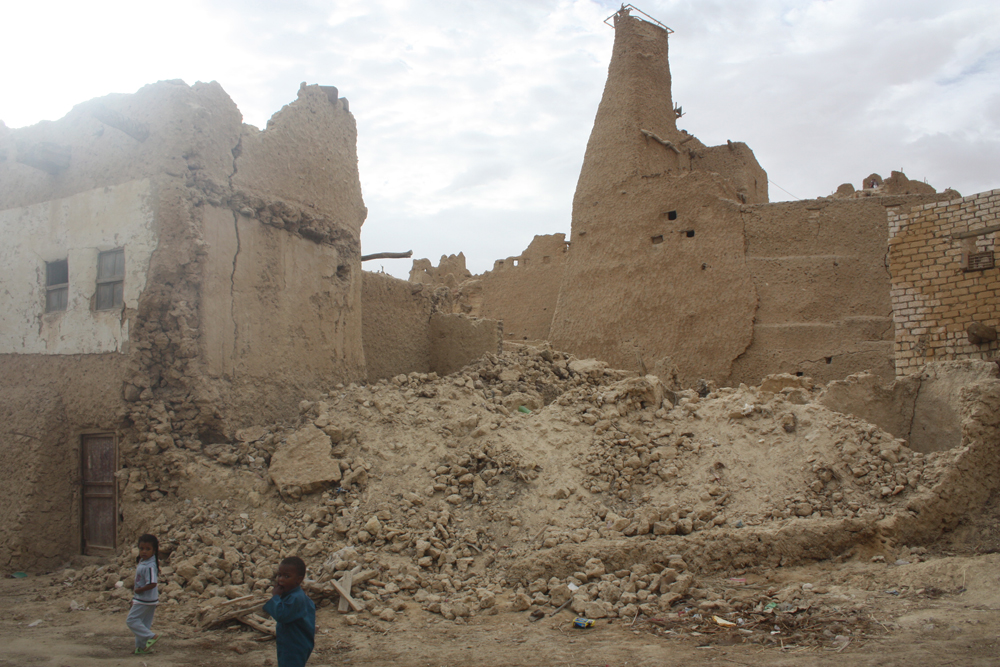
The ancient fortress of Siwa, built of natural rock (inselberg), made of salt, mud-brick and palm logs and known as the Shali Ghadi("Shali" being the name of the town, and "Ghadi" meaning remote),although now mostly abandoned and 'melted', remains a prominentfeature, towering five stories above the modern town.

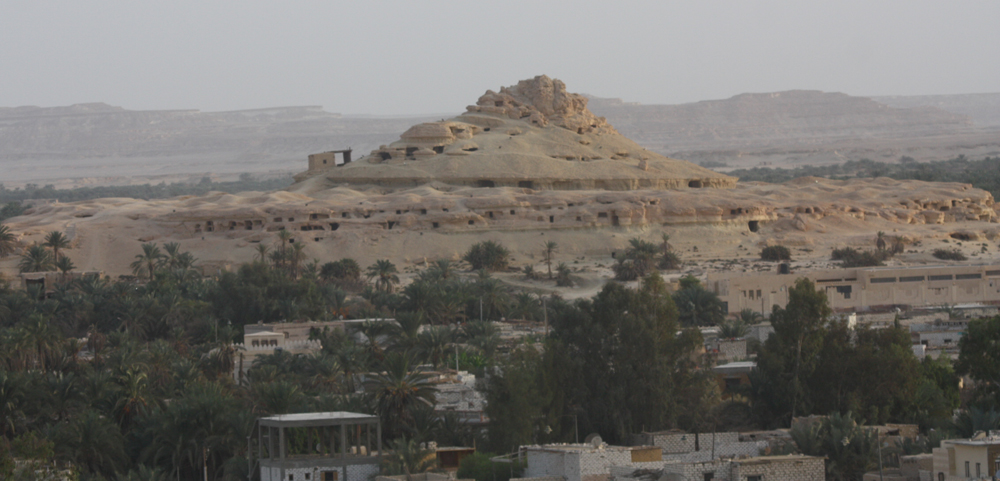

a Roman-era necropolis featuring dozens of rock-cut tombs;and "Cleopatra's Bath", an antique natural spring. The fragmentary remains of the oracle temple, with some inscriptions dating from the 4th century BC, lie within the ruins of Aghurmi. The revelations of the oracle fell into disrepute under the Roman occupation of Egypt.


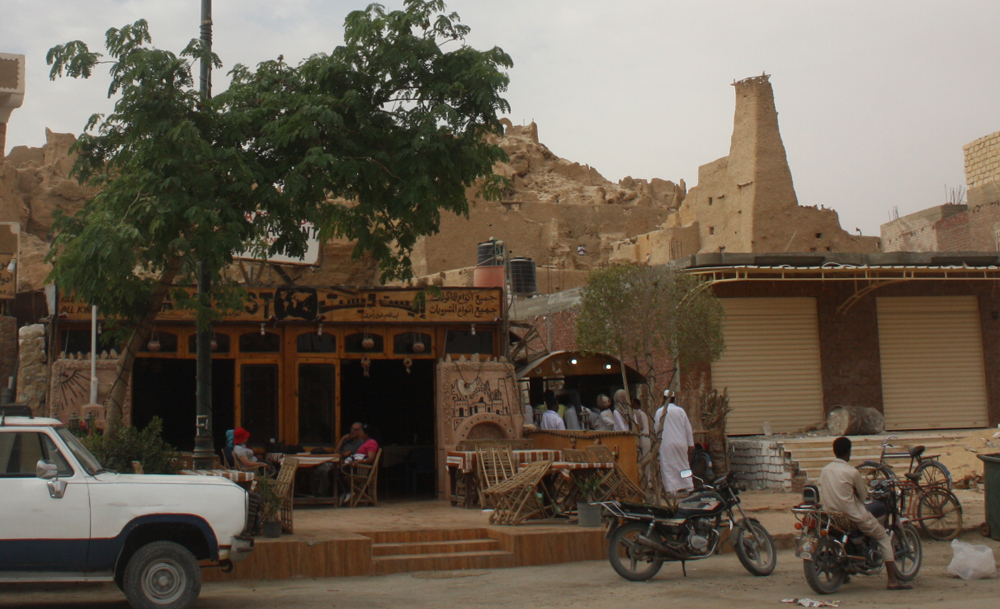
Surveying the endless expanse of deserts of northeastern Egypt, theOld Mosque of Shali Fortress, completed in 1203, is perched peacefully atop a small hill in Siwa Oasis, a remote village 185 miles (300kilometers) south of the Mediterranean Sea. The location was chosen for its elevated position in case of attack from nomadic raiders.
 '
The old mosque survives today as the oldest monument built in Shali as well as the oldest mosque in the world constructed using karshif,a unique earthen material produced naturally through the calcificationof earth mixed with salt from the soil. The rough, undulating textureof the façade still bears the handprints of the original builders.
As Shali has evolved, the mosque has remained a perpetual and unremitting symbol of the history and community of Siwa Oasis.Devastating floods in the early and late 20th century, bombings inWorld War II, and modern developments in the town beginning in the1980s have destroyed many ancient structures. Concrete has replaced the vernacular karshif building materials, threatening the historic and architectural integrity of Siwa Oasis. Despite its small size and state of dilapidation, the mosque remains an important symbol of the community and a place of religious rituals and celebration.Preservation of the site will help to engage the town in the karshiftradition and conserve and protect a vital icon of the region.


 .
Shali from my balcony in the Elkelany hotel


Once the bus arrived in Siwa. all the hassle started again there are no taxi's or horse and carriages in Siwa only the new carry motorbikes. these are rigged out with a piece of wood with a carpet to sit on.
 and 4x4 carts the 4x4 being the donkey that pulls it, this one guy with his new motor bike was very persistent and knew all the hassle to get a customer on his bike. it ended up with free travel to the hotel and of course I jumped at the free travel bit ;-he showed me the hotel brochure of the palm trees hotel, and goddamn I should know by now not tobelieve brochures or drivers, especially when the brochure is 5 years old.
Trees grow and so do houses , the hotel it seemed was along way from the bus terminal. well it had to be so I could not find my way back if the hotel was unsuitable. which it was;- first I was shown a room on the first floor;- opened the window and sure enough there was palm trees , not sure if the palm tree was there first or they built the hotel walls against the tree but it was claustrophobic.
as I headed back down the stairs .a voice said;- we have more rooms Mr. and then showed me another one;- with a view, he said .
yes"another palm tree. grabbed my bags and sat in the bike, where to said the driver. el-kelany I read it somewhere and remembered the name as the hotel I use in Aswan is the Kelaney.
no good that hotel ;- worse than this, I said , yes,

OK take me to a hotel near the El-kelany, as his face dropped
we headed direct to a hotel of the drivers choosing. first I said" I need food and refreshment I had not eaten since breakfast in Klaus'es apartment at 6.00, as we past a coffee shop, stop here, I said. as I was sitting in the coffee shop I saw the sign El-Kelany hotel. and told the driver OK now I see the kelany it has A fine view of the Shali Mountain fortress and open views from the roof .
took my bags from the vehicle as the guy asks for 10 le. you said free. and this is the hotel I choose.
during this 20 minutes on the back of his bike I found out he worked in Hurgada and moved here to Siwa a few months ago, asked a few questions on what I want to see and came back with ;-I do all this will cost 50le to see this 50 to see this etc. 15 miles to the dead mountain he said, how for to the sea of salt ,I asked ,35 miles he said I will see ;-Isaid; meet me here at 9.00 in the morning,
then I met the owner of the coffee shop Adham, a young man of about 25. spoke good English that surprised me a little as its the first time I have met an Egyptian that can, and this is Siwa miles away from anywhere, I asked him where is the palm trees hotel, about 100 meters to the back of the coffee shop. . ah I said, and how far to the bus terminal. he looked at me rather puzzled. and said just around the corner. must be a bloody big corner I said its taken that guy on thebike 20 minutes to get here, no good this man he said, with no fear, first time I hear an Egyptian say about another,
the 35 miles I walked two days later in one hour stopping to photograph anything and everything that took my interest, the 35 miles was actually 5 killometers. where I saw the flamingoes. during the next few days I found out a lot about these people. they are Sewian not Egyptian and speak the barber tongue,, I asked about why there are no police, and found out the Sheik runs Siwa, if they have a problem they go to the sheik if any one wants to reside in Siwa they first go to the Sheihk,that way they do not have problems like I had with conmen in the westbank of Luxor,

 Siwa4x4's have their own parking places, the El-Kelany hotel is the far pink building. if you decide to go to siwa and have any back problems like I have do not take the motor bikes even if you do not have a back problem, you will have after riding and sitting in the back of these three wheeler bikes you feel every little bump in the road, there seem to be more sleeping policemen in siwa than any other town I visited.( bumps in the road) you also have to climb in these contraptions, notice the donkey cart is made to step in and the seating is cushioned, its not far to any of the places to visit so do not feel sorry for the donkey,
 '
even the locals use this mode of travel,

 in the local shops Olives and lots of them .
next to the bike shop on my way to see SHALI there is a new build building with its hotel sign ! siwa style

this is not a hotel I think its someones dream all I saw in the hotel was a whole load of virgin bottles, oil that is,
Siwa is a producer of olives that extra virgin and olive oils are squeezed out of and lots if it. then I passed a
 few shops that sold local arts and weavings.
another new build
 .


hanging baskets made of palm leaves
 .
and a few areas in need of a complete overhaul
 as they are doing with this building one person said it was going to be an olive press exhibit, I say they should build it properly if they want tourists to visit the inside of the building Top photo they are putting quarry waste soil on the roof the next time I went to the top of Shali it looked like the wood poles holding the roof soil was about to colapse under the weight,
these 3" poles are all that holds the roof up and already bowed a good 8"
OPPOSITE THIS NEW BUILD ARE THE FIRST STEPS TO GET INTO WHAT WAS THE FORTRESS OF SHALI'
here too one can perchase hand made dollies and crafts


this early morning visitor does not get the welcome handcrafts on the first steps up into the fortress. and what is the old mosque.

here on the second flight of steps the stairs split one leads to the old Mosque the other to the top of the Shalli fortress.

I would have liked to go inside the Old Mosque but on my 2 visits it was not open. another time maybe I shall go see inside,

here I am half way up or half way down not a place for the faint hearted,
the steps are made of rope and palm tree trunks,
 '

 .


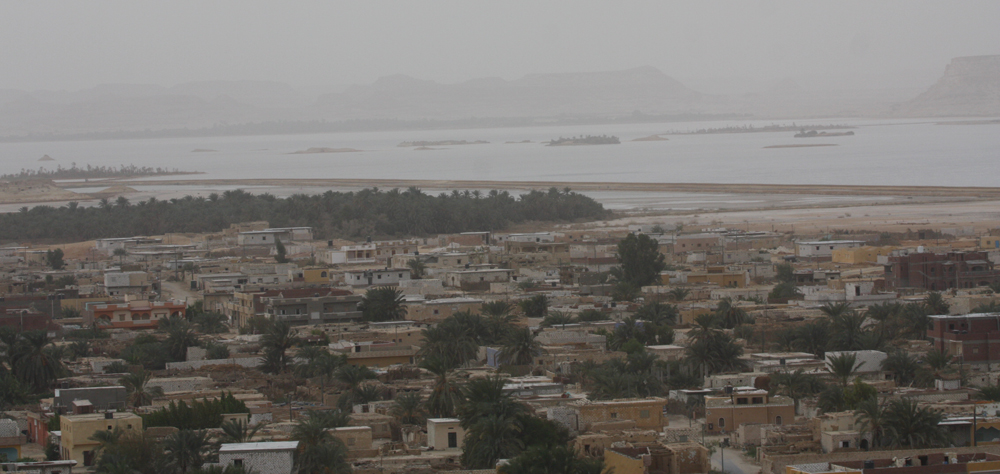
fromthis the highest point of the fortress there is a 360 degree view ofthe whole of the Siwa oasis with its lakes and mountains


 '
the village to the base of hills in the background is where Siyaha festival .is held each October for 3 days.

go to this link for a very informative site on Siwa
http://www.saharasafaris.org/discovering-siwa
 '


On my return from the top of Shali there was not a soul in sight the dolls and handcraft had reapeared and after my visit of the fortress one wonders if its true about fairies,dungeons and dragons.
 .
looking up the old mosque minaret
 '
the mountain base of the mosque the entrance looked a bit crumbled so I did not enter
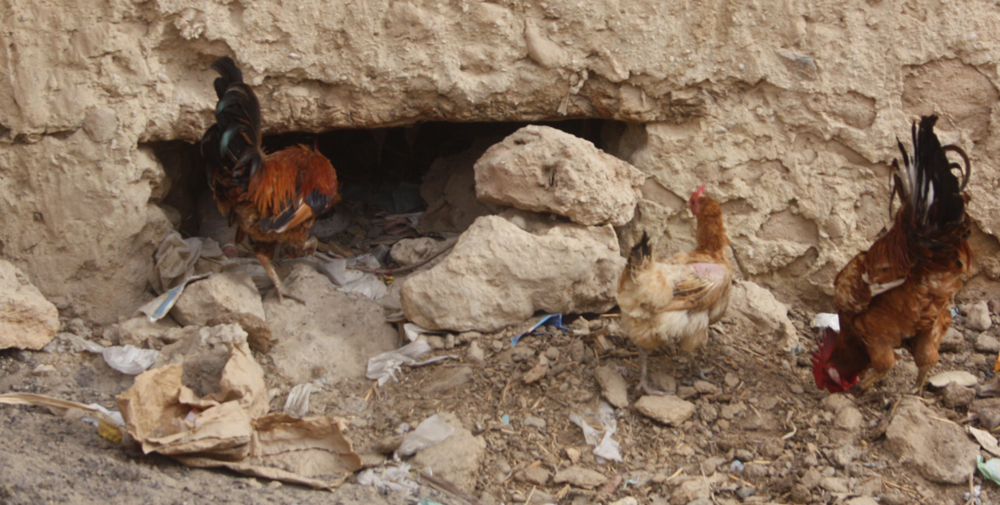
Unlike me these chickens have no fear of making good use of another hole in the mountain.


 .
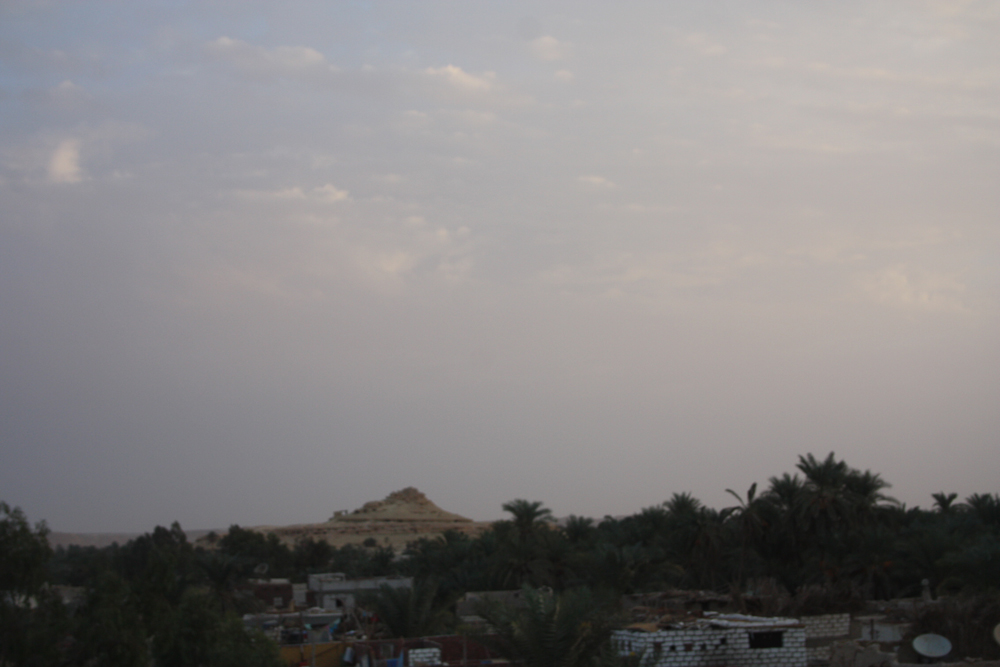
the following day I went atop this hill next to the fortress of Shali. with its spectacular view of the surrounding area
 .
 .

 .




 .
Not so long ago the dead where placed a few inches in the ground covered with palm leaves then a thin layer of soil on top and wood of the palm tree on top.
 .
'
The centre of Siwa

 '
some hotels have their own 4x4's

Its carnival time and too many people for the cart . so why not load them in the lorry to do the 5 kilometer to the fairground


breakfast time in the high street

groceries heading for on of the hotels
.no work today for this donkey


 '
horses get to pull even bigger carts not sure how the ladies climb in these carts,

one of siwas main export! dates


 '
another group off to the carnival


 '
the dogs of shali
 ;
greengrocers and coffee shop

the best restaurant in Siwa
 '
kebab halal. bbq.
 '
donkey dates and cockerel, the days washing all in a demolished house
People from around Shali have to bring in their own water from the springs

 .
this cultivator needs a new engine

 .
 '
 .
village near the Oracle of Alexandria the Great


 .
one of three fruit shops in Siwa this one having the best of fruit and fresh vegitables
every two days it had a vehicle bringing in fresh supplies


 '
lots of olives here in the oasis. I had never seen olives on the tree. this one looked ripe and was the only one left on this tree and me nevert asted an olive direct off the tree decided to taste this one , I picked it walked a way until I came to one of the many fresh water springs washed it and ate it. the worst thing I ever tasted, left my mouth needing water to get rid of the awefull taste. not sure if the fruit had over ripened but its no wonder it was left on the tree to rot.

This tree is just about ready to harvest it also seems the fruit is an all year round harvest some trees had been harvested while others are full of fruit the same with the palm trees
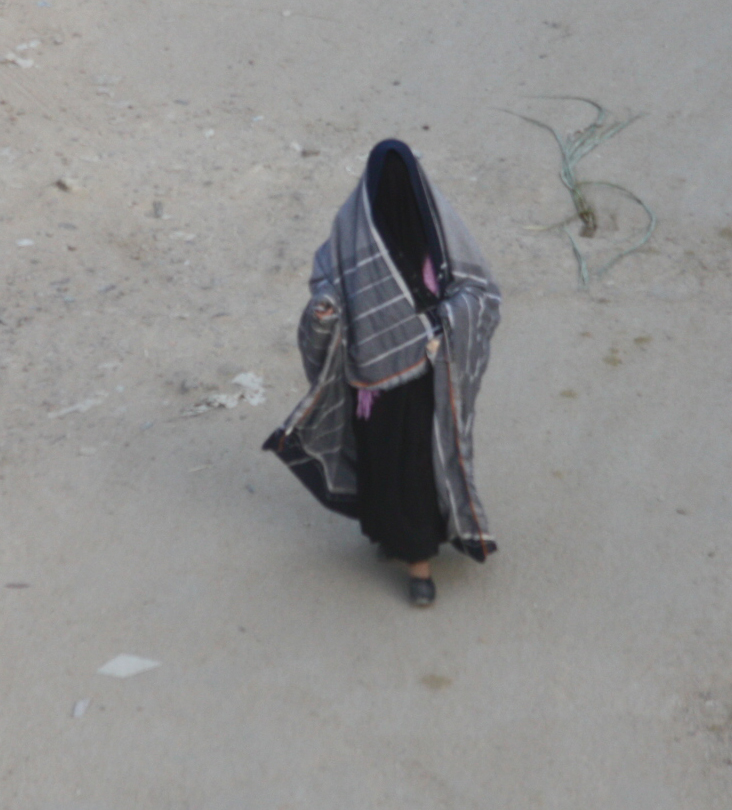
In public, all married women wear a foot-length, bluish shawl and completely cover their faces with a black gauze.
 .


 '
IF THIS A TRUE DESCRIPTION OF SHALI IN 1900.
ITS SEEN A LOT OF DESTRUCTION OVER THE PAST 110 YEARS
 .
GREY LAG GEESE ROAM THE STREETS EARLY IN THE MORNING,


 .

STRANGEWAY OF BUILDING A VEHICLE CHASSIS IN ONE BUILDING AND A JERRY CAN IN THE OTHER, I WONDER IF THATS WHERE THE TERM JERRY BUILDERS COME FROM.
A jerrycanis a robust container made from pressed metal. It was originally designed in Germany in the 1930s for military use and holds 20 litresof fuel. ,
 .
In public, all married women wear a foot-length, bluish shawl and completely cover their faces with a black gauze.
IF THIS A TRUE DESCRIPTION OF SHALI IN 1900.
ITS SEEN A LOT OF DESTRUCTION OVER THE PAST 110 YEARS
GREY LAG GEESE ROAM THE STREETS EARLY IN THE MORNING,
STRANGEWAY OF BUILDING A VEHICLE CHASSIS IN ONE BUILDING AND A JERRY CAN INTHE OTHER, i WONDER IF THATS WHERE THE TERM JERRY BUILDERS COME FROM.
A jerrycanis a robust container made from pressed metal. It was originallydesigned in Germany in the 1930s for military use and holds 20 litresof fuel..The date packing factory near Fhatnas Island.
 .
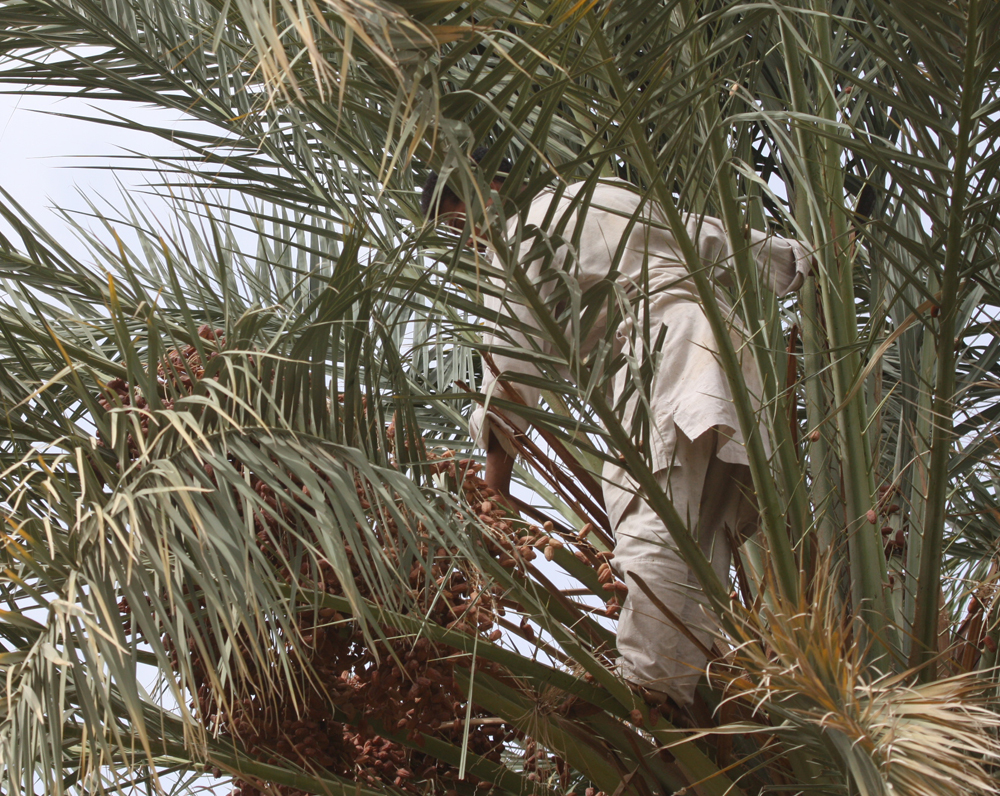
 Picking the dates
they put sheets on the ground
 '
then the palm dates are cropped and let fall to the ground

 ;
 .
Here on the road because of passing traffic some will get trod into the tarmac thus making a new face layer on the road.
 '
,

the date road surface


once the dates are picked they are spread out to dry on a sandy surface
here the white -crowned black wheatear, is making a meal of the dates '
 .

 .
I loved Siwa not sure if its the month I went but I never saw one mosquito and they where one of the reasons I had reserves of going to Siwa, two things that I did not like aboutSiwa as like the rest of Egypt some of the donkeys are misstreated look at the stick this guy has in his hand, while bathing my sore feetin one of the water outlets. I saw this donkey whose cart was beingway overloaded with water containers. all the containers where loadedto the front of the cart then the three stoges boarded the cart by thestaves, then the little, I say little because it was quite a young ,the donkeys legs gave way to the weight, then the one stooge procededto kick the beast until it got to its feet once on its lege it wasbeaten with the fist, then the donkeys legs gave way again, and two menon a passing donkey and cart stopped to get the donkey back on its feet.
the donkey was unharnessed. I left because if I stayed Iwould have got involved and beaten the guy with his own stick, and knowing these guys they would all have turned on me,


 .

Open sewage was onother dislike of Siwa this photo was to the rear of Shali where a few houses have modern facilities such as washing machines and bathrooms, mabye six houses they do not have mains water its brought in by donkey and pumped to water tanks on the roof of the building,
the others I saw was to the rear of Siwa Paradise Hotel and the siwa safari gardens,
the water is pumped direct from a spring in the grounds.to the hotels services ie wc etc then flushed into an open sewer to the rear of the chalets.
and thats my nasty bit about Siwa,The canals here in the oasis are so clean if one was thirsty one can drink direct from the canal the polluted sewage water does not as yet get into the canals, unlike Luxor and most of Egypt particularely El Fayoum link.
 ;


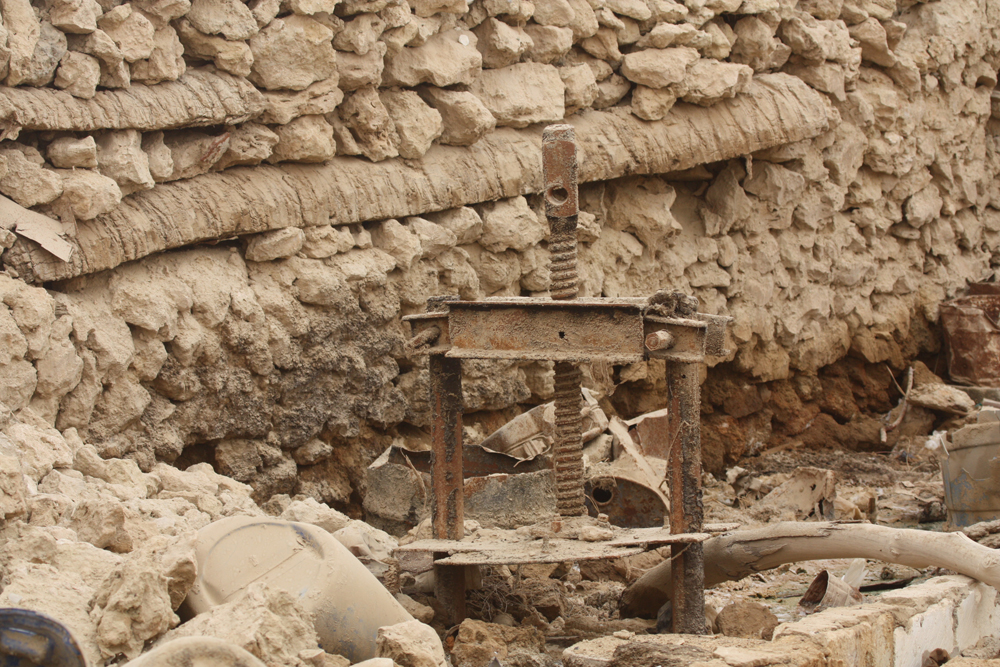
 '
 .
hand made floral pattern whatever shawl or bed cover?
 '
An old corn chaffer can also be used for chick peas, rice threshing etc.
 .

there are 300 water outlets in the oasis mostly springs' some have been capped with a pipe and a tap to realease the spring water when needed. no mechanical pumps only the ones near hotels etc.
 .

 '


 '


 .


 '
the salt pans with the new road into what was fatnas island.
 '


 '


 .

 '
lizard footprints
 '


 '
with an open view to the Shali mountain
 '

Siyaha festival
they are heading for the festival and so am I
 ;
 ;

A sign I passed on the way to the festival not sure why one would sit besides a fire

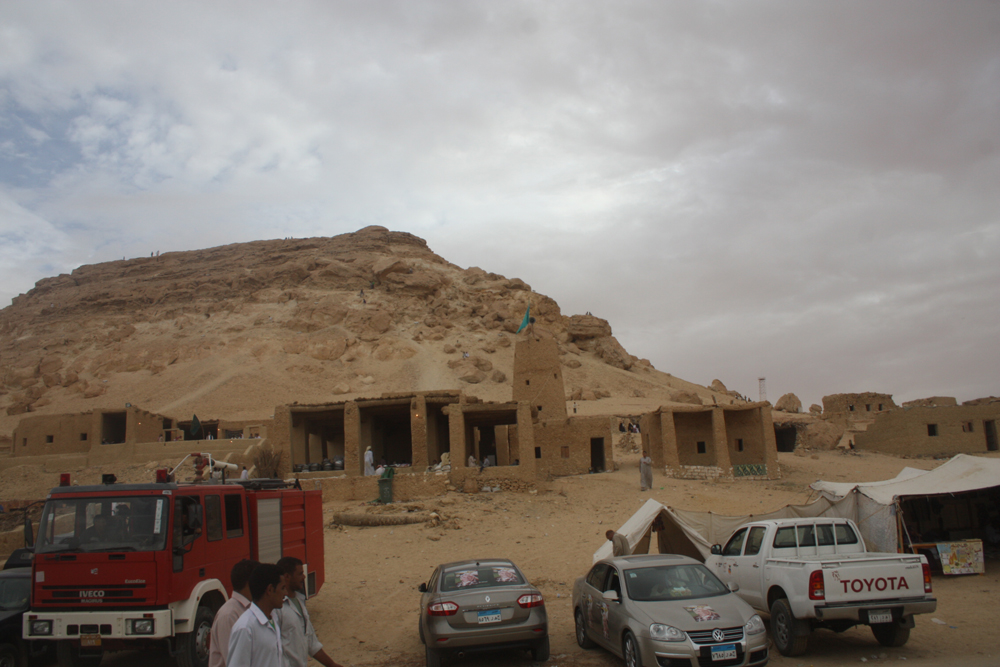
 '


 .


 .


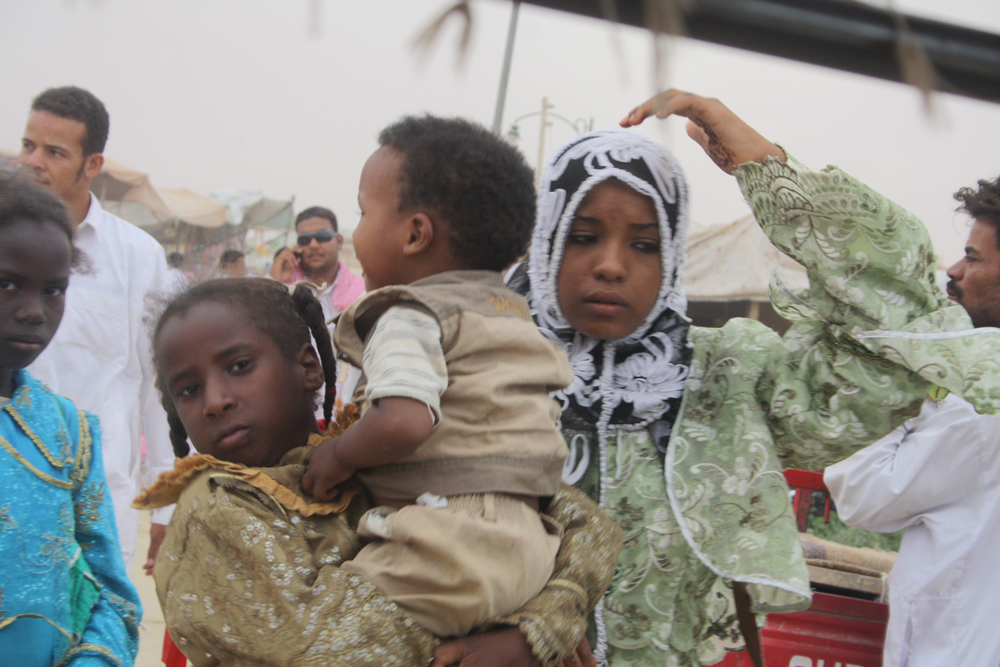


 '
 ;
The oracle mountain
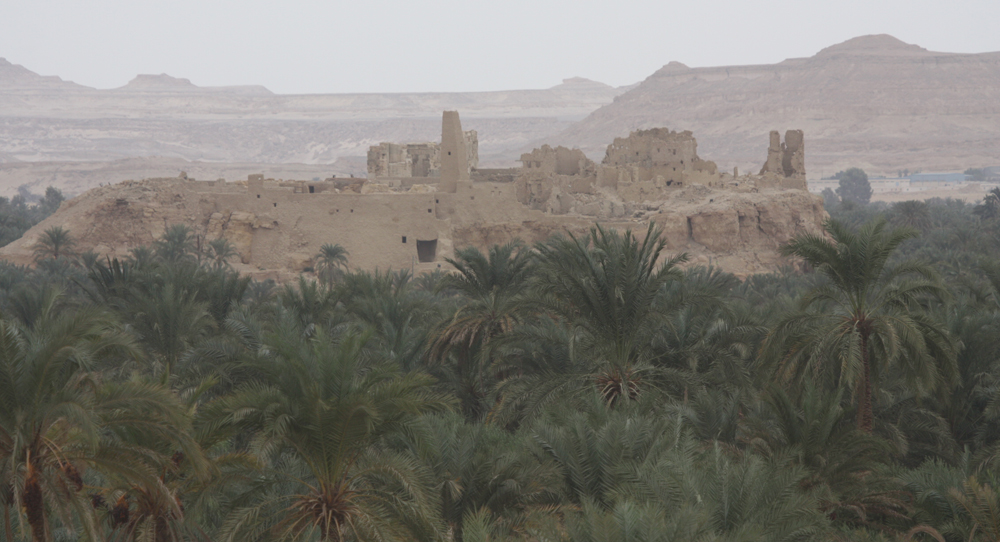 '
Shali mountain
 '
 ;


 '

 ;


Birds in Siwa
 '
The flamingos about a dozen or so where way out on the salt flats
they say the best time to see them is in March
 '

the Grey lag geese have taken over the square in Siwa
 .
barn swallow

 .
White-crowned black wheatear, Oenanthe leucopyga. males
 .
female,
 .
Kestrel
 .
Glossy Ibis
 .
pigeons are everywhere
 .
Muskovy's
 .
turkey male
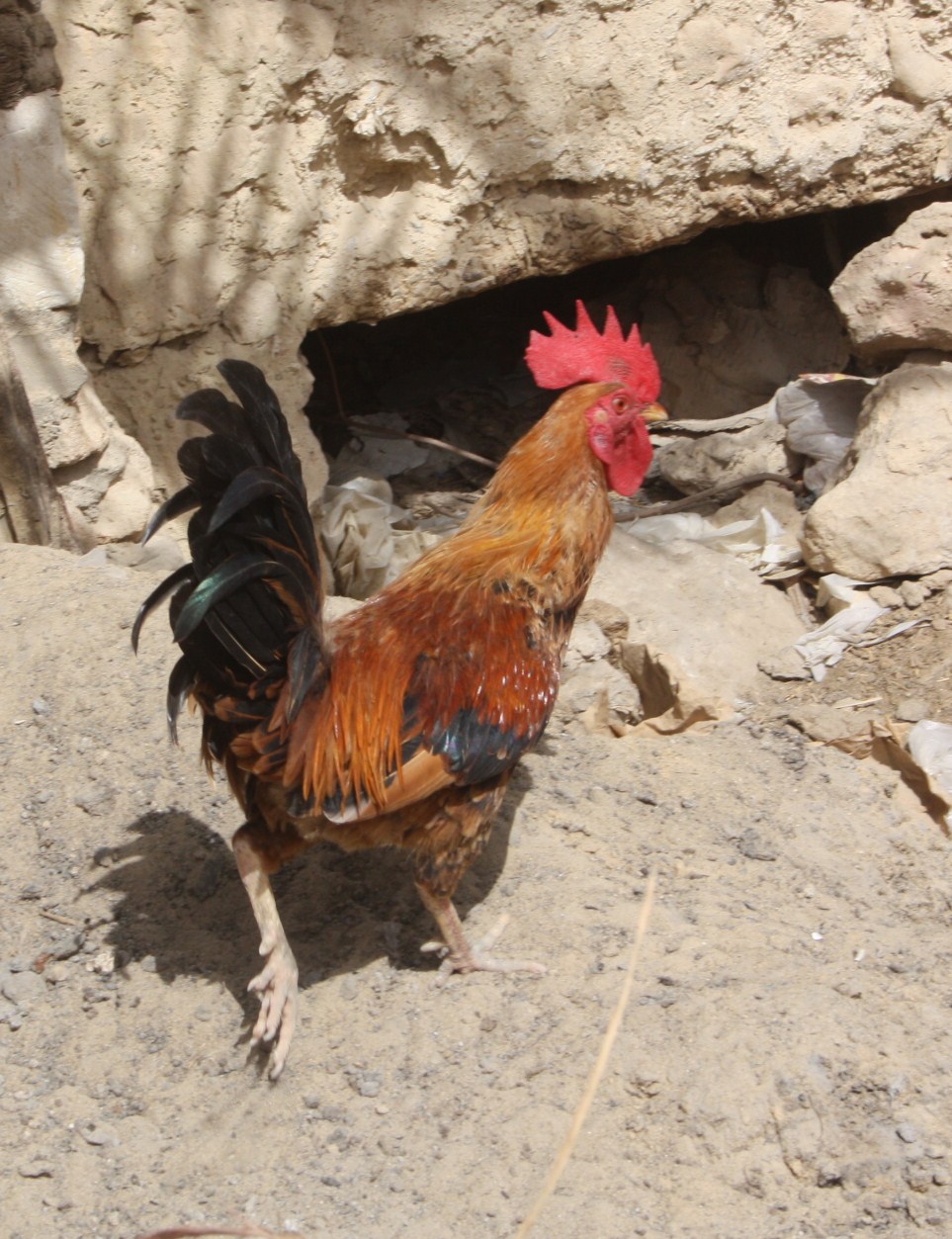 .
Cockerel in fine plumage

pied wagtail.
 .

photo taken 20th October 2010 at lake Amoun Siwa


a cute frog that seems to eat leeches


 .
and holds one down for later

Oracle temple of Alexandria the Great
meaning of Oracle;- The sanctuary, or Most Holy place in the temple; also, the temple itself.read up and a few photos on this link http://www.touregypt.net/featurestories/templeoforacle.htm


The Temple of Umm Ubayda
at the Siwa Oasis in Egypt
 .
this is all thats left of the temple


 .
Gebel al-Mawta (Mountain of the Dead)
The Mountain of the dead is a hill side full of tombs which wereunknown to 19th century explorers. The huge limestone structure wasdeveloped during the 26th Dynasty and during the Ptolemaic period, andapparently was well known to locals. During WW II when the battlesaround Siwa were raging, they often hid in the tombs, and for monetaryconsideration, often sliced sections of the walls off for soldiers assouvenirs, but the Romans also plundered the tombs and often reusedthem.There remains a number of interesting tombs. These include:
TheTomb of Si-Ammon, who was a rich Greek and who's tomb dates to the 3rdcentury BC. Here, there is a image of Nut, with a halo of sycamoreleaves (just to the right of the entrance.) There is also an image ofSi Amun himself making offerings to Egyptian gods.
The Tomb of Miso-Isis, which is unfinished, but retains the owner's skull.
TheTomb of Niperpathot, with inscriptions and drawings using apparentlythe same red ink currently used by Siwan pottery artisians.
The Tomb of the Crocodile, which includes a painting of a crocodile.
but on my visit the tombs where locked so no entry also its a no photo area
go to this link to see photo of the tombs


 .
even today there are some living in the tombs


 .
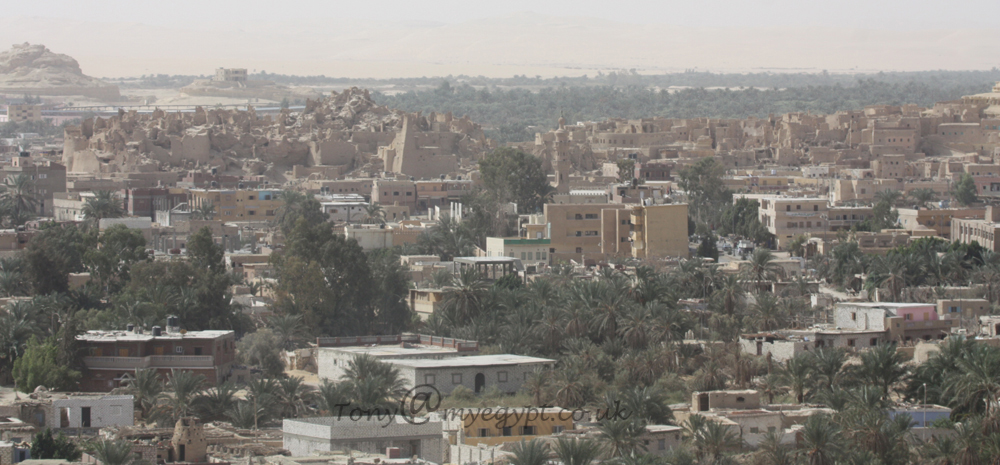
Shali and siwa town from the mountain of the dead

 .
photos from my climb up the Shali mountain


 .
the only steps on this mountain the last step was 3 foot.


 .
once on the top of the mountain I sat to survey they 360 degree view,
and to catch my breath the climb was very slippery under foot and had to be climbed by winding ones way around the mountain


 .


